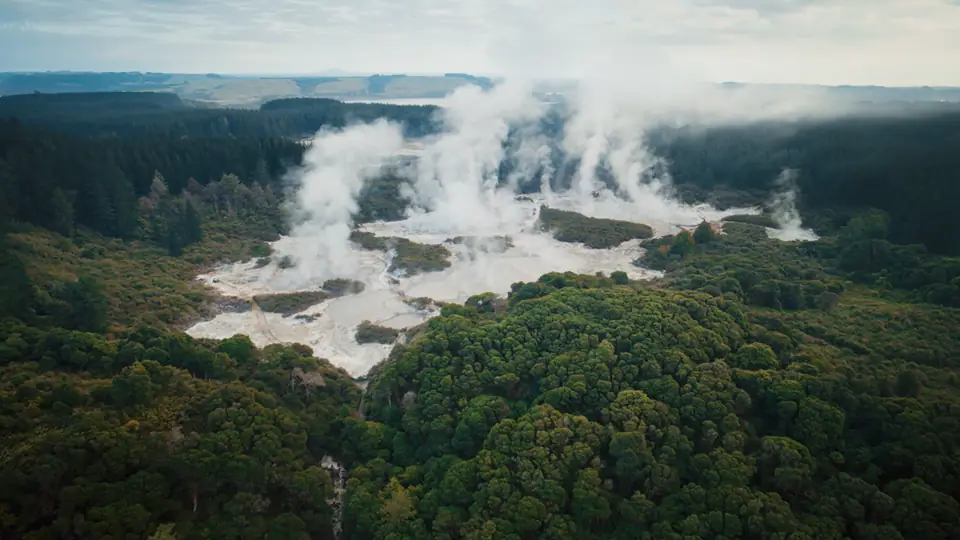
Rotorua is a city of about 58,500 people on the southern shore of Lake Rotorua, a lake that fills the crater of a volcano that erupted about 240,000 years ago. The ground under the city is still hot. Steam comes out of drains, parks and back gardens, mud boils in fenced-off pools beside the road, and the whole place smells faintly of sulphur. It is also the home of Te Arawa, whose ancestors settled here in the fourteenth century, and close to half the people who live here are Māori, the highest share of any New Zealand city. Those two things, the geothermal field and a living Māori community, are why it has been a tourist town since the 1870s.
Every one of the 203 itineraries we sell that come to Rotorua stays the night, and 162 of them stay two. Most arrive from Auckland, 105 of them, often by way of Hobbiton, and leave for Wellington, Auckland or Napier. The one thing nearly all of them book is an evening at Te Pā Tū, on 120 itineraries, and the next most common is the kiwi hatchery at Te Puia. Below is what else is worth your time, and what is not.
- From Auckland
- 230 km, about 3 h
- From Taupō
- 80 km, about 1 h
- From Wellington
- 450 km, about 5 h 30
- Nearest airports
- Rotorua (ROT), 9 km north-east of the centre, Auckland (AKL), 3 h by road
The geothermal parks: which ones to see
Rotorua sits in the Taupō Volcanic Zone, and there are more geothermal parks within half an hour of the centre than anyone has time for. They are different enough that choosing matters. Most people should see two: one in town and one to the south.
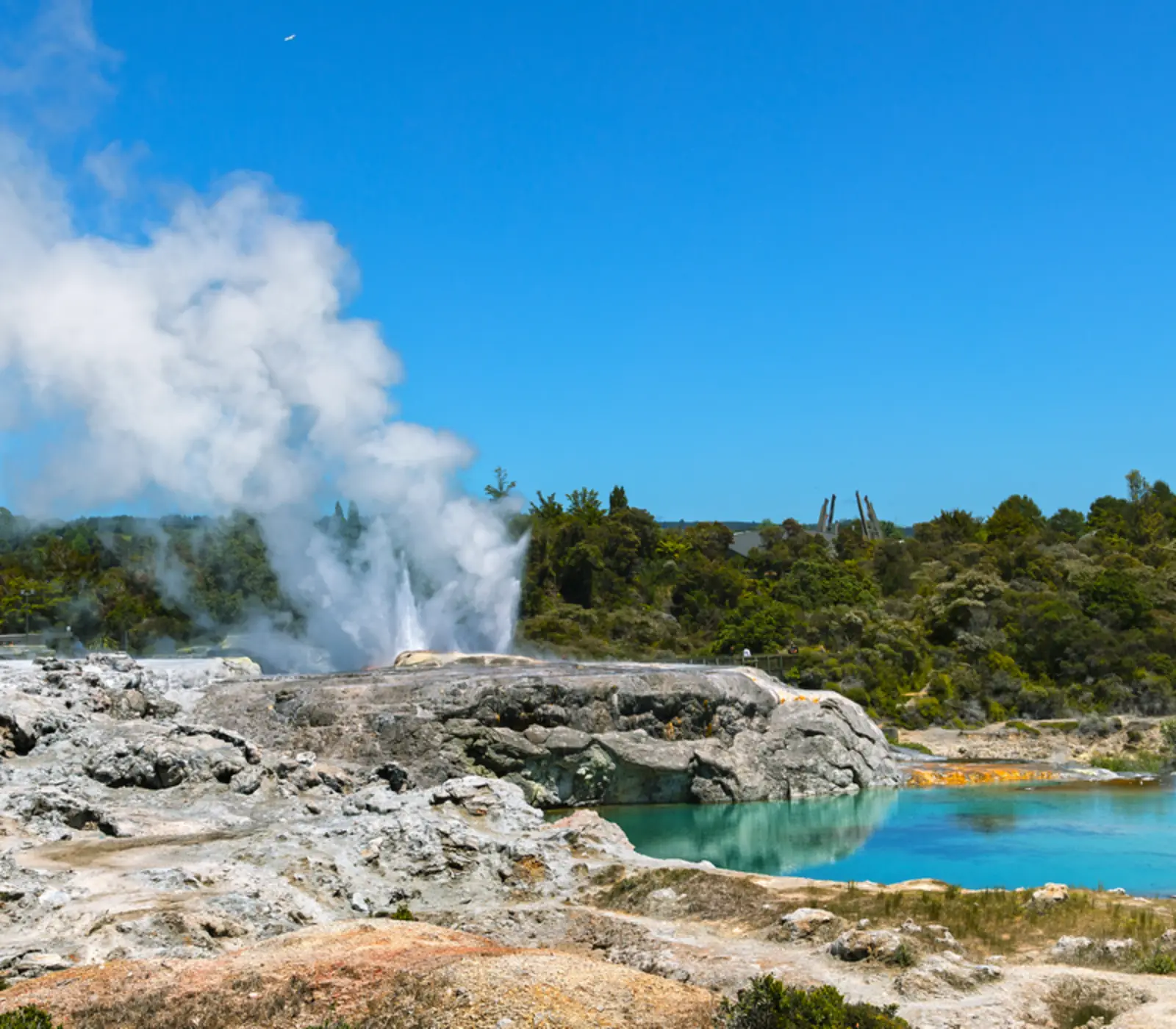
- Te Puia, in the Whakarewarewa valley on the edge of town: Pōhutu, the largest active geyser in the southern hemisphere, which reaches about 30 m and usually goes once or twice an hour, plus mud pools, the national carving and weaving schools, and the National Kiwi Hatchery. Our itineraries book the hatchery on 60 and the daytime guided visit, Te Rā, on 12.
- Whakarewarewa, the living Māori village next door, where families still cook in the steam vents and bathe in the hot pools. A guided walk here shows how people actually live on the field.
- Wai-O-Tapu, 30 km south: the most colourful of the parks, with the orange-rimmed Champagne Pool, the green Devil's Bath and the Lady Knox Geyser, which is set off with soap at a fixed time each morning. It is on 35 of our itineraries and a natural stop on the way to Taupō.
- Hell's Gate, 15 minutes north-east: steaming, sulphurous and bleak, with mud baths at the end. 9 of our itineraries include the mud bath and sulphur spa.
- Waimangu Volcanic Valley, south of the city: the youngest geothermal landscape in the world, created by the 1886 eruption of Mount Tarawera, with a downhill walk past Frying Pan Lake to the shore of Lake Rotomahana.
- Kuirau Park, in the middle of town: free, open all the time, with a steaming lake, mud pools and foot baths. The best free thing in Rotorua.
Māori culture: what an evening at Te Pā Tū involves
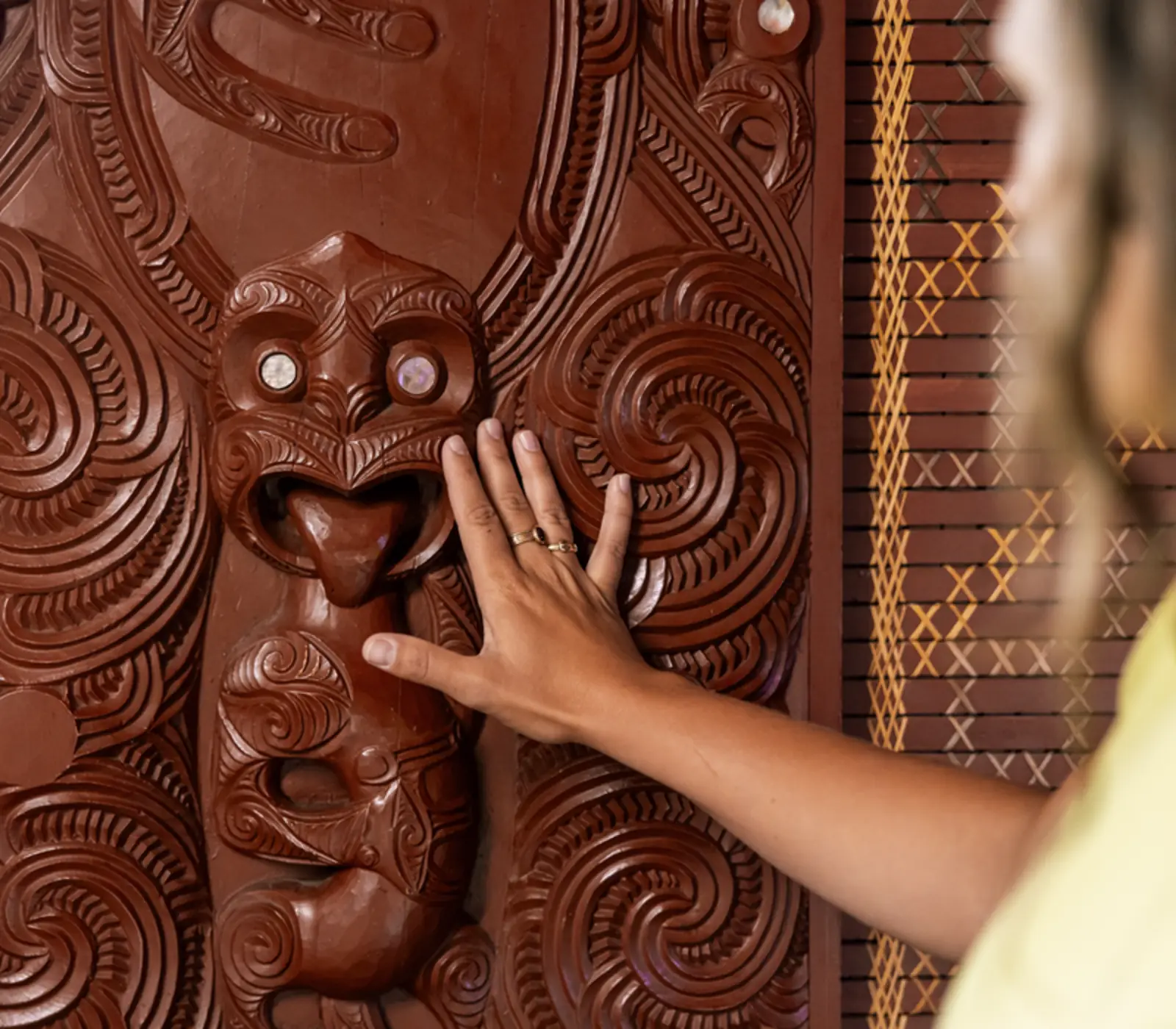
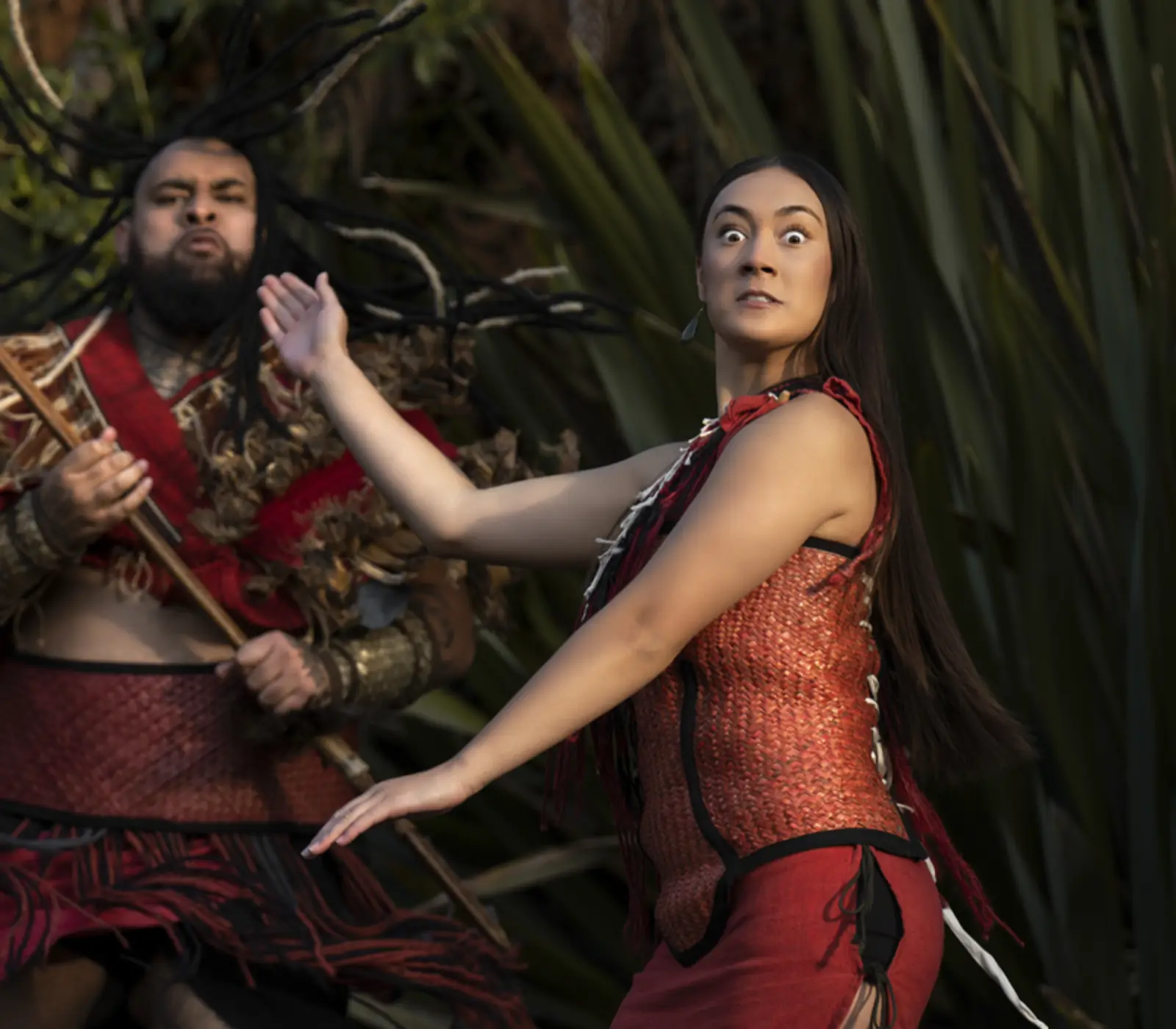
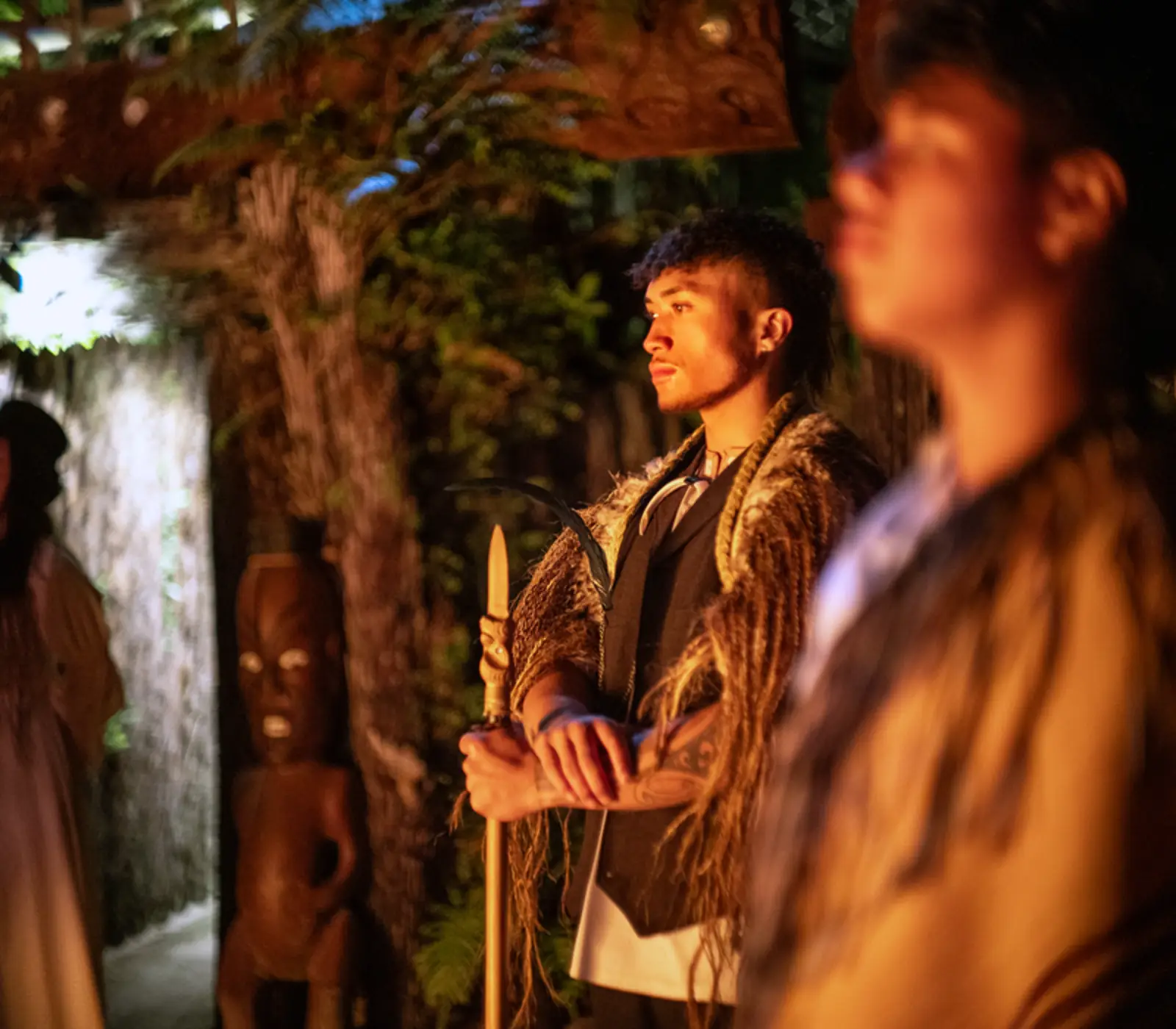
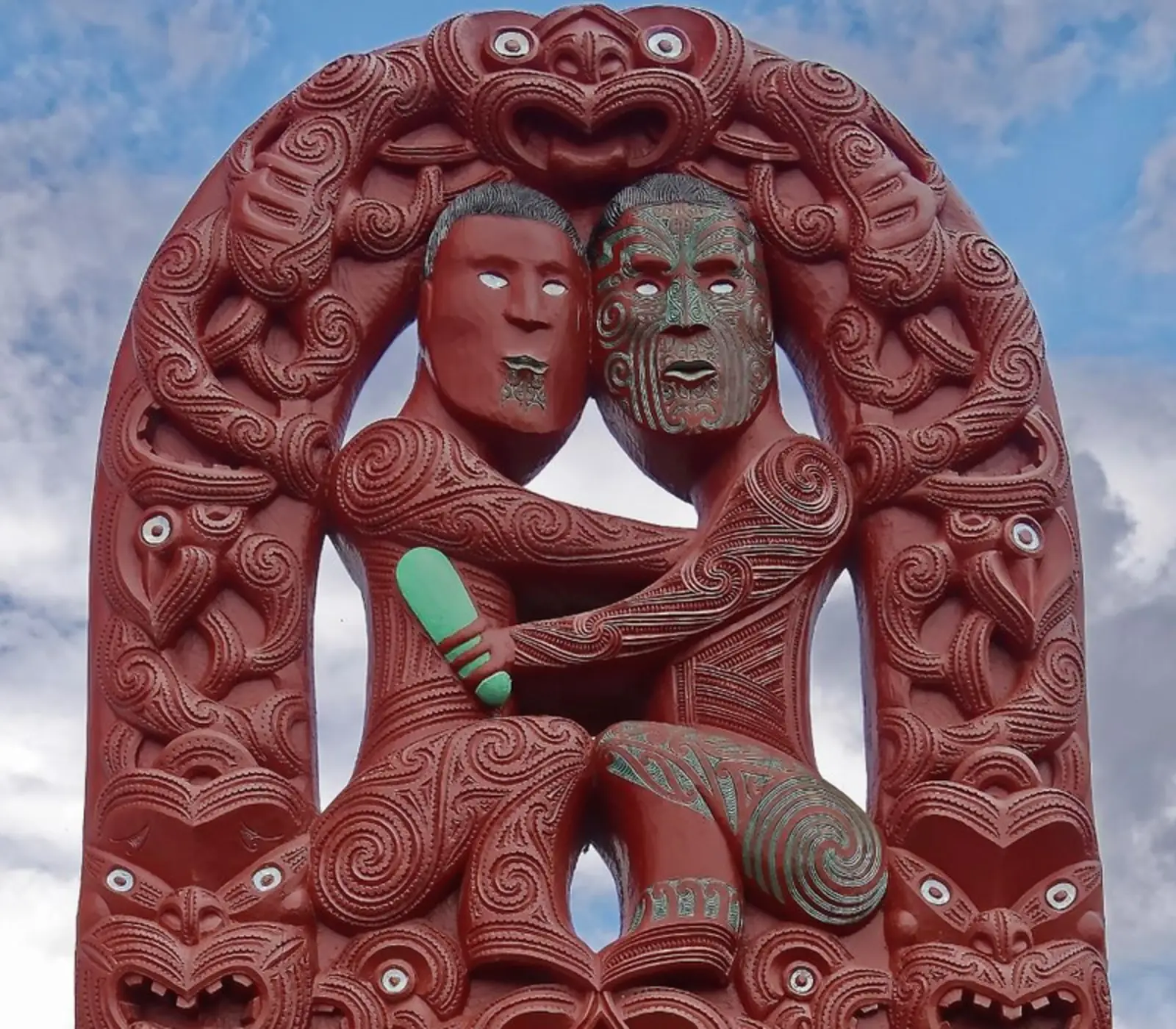
Rotorua is where most visitors first meet Māori culture presented for visitors, and it is done here with more depth than anywhere else. The evening most of our itineraries book is at Te Pā Tū, south of the city in a forest setting: a pōwhiri, the formal welcome, then stories, songs and haka, and a hāngī, food cooked in the ground, for dinner. It is a structured evening for a large group, which some people find too staged; the performers are Te Arawa and other iwi, and the stories are theirs. Te Puia runs its own evening, Te Pō, on 5 of our itineraries.
For a quieter look, walk down to Ōhinemutu on the lakefront, the original village of the city, where St Faith's Church has a window of Christ in a Māori cloak, etched so he appears to walk on the lake. Treat it as a village, not an attraction: people live there. The Rotorua Museum, in the Tudor-style Bath House in the Government Gardens, has been closed for earthquake strengthening since 2016 and is not expected to reopen before 2028.
Other things to do in Rotorua
- Hot pools: the Polynesian Spa, on the lakefront, is on 19 of our itineraries; the lake-view pools are the ones to book. Wai Ariki, a newer spa run by Ngāti Whakaue on the same shore, is on 7.
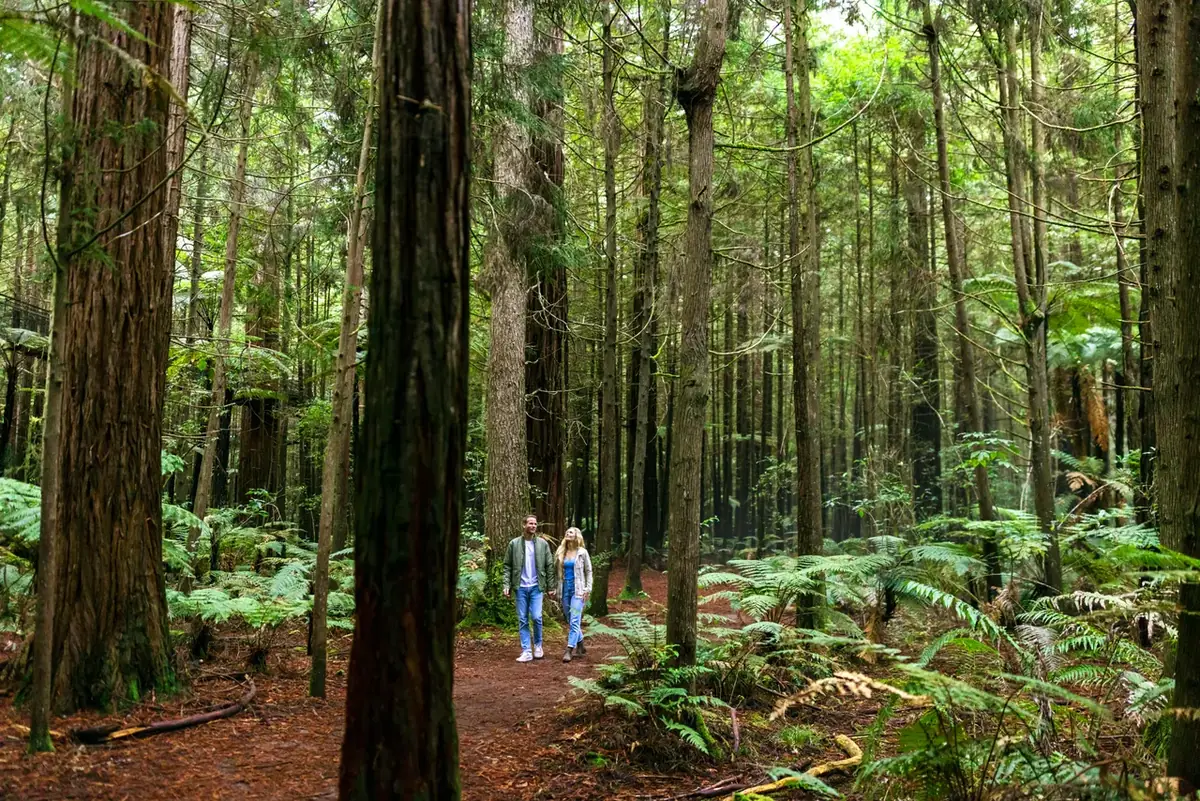
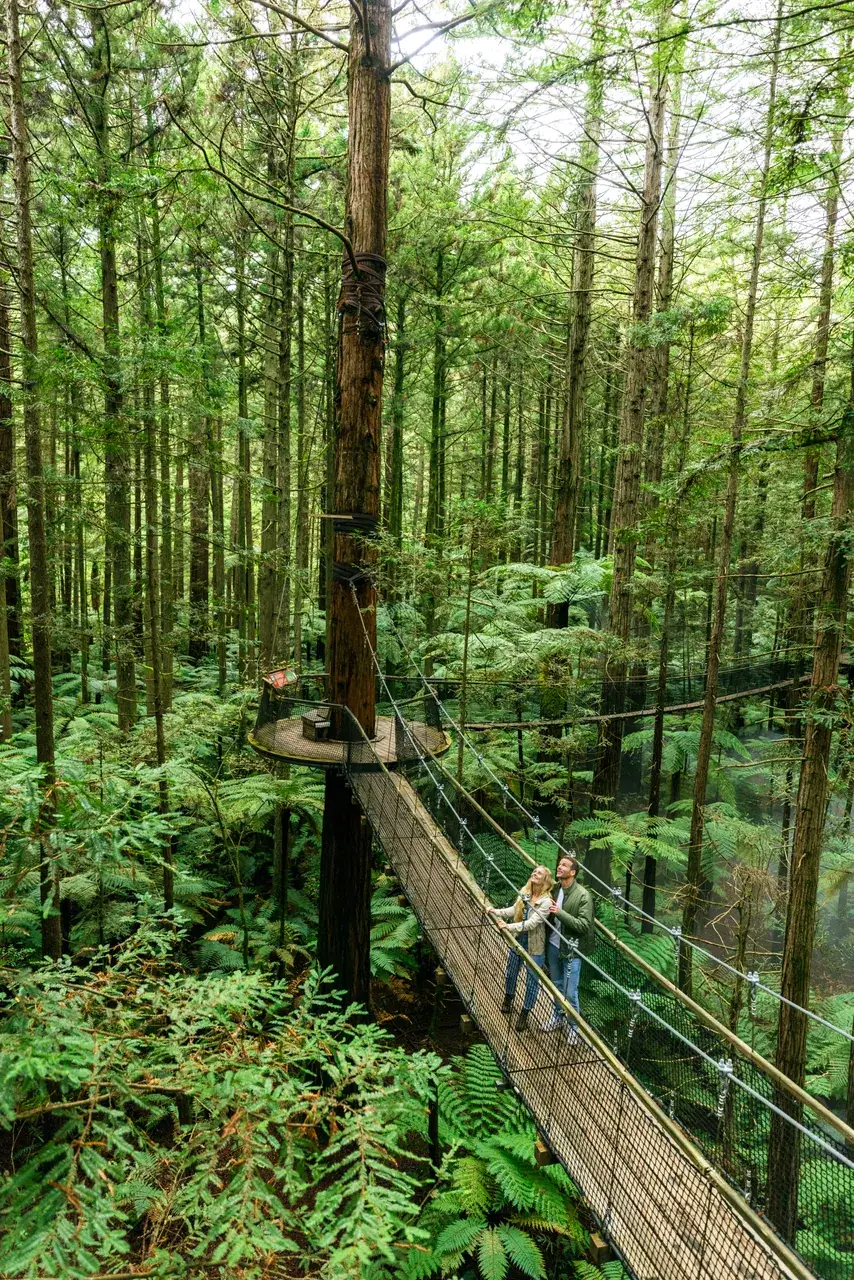
- The Redwoods: Whakarewarewa Forest starts on the edge of town, with free walking tracks under Californian redwoods and hundreds of kilometres of mountain bike trails. The Treewalk, a line of suspension bridges between the trunks, is lit with lanterns at night, and is on 5 of our itineraries.
- Ziplining through native forest with Rotorua Canopy Tours, on 57 itineraries. It is more about the forest than the speed, and the guides talk about the pest control that keeps it alive.
- Mount Tarawera: the 1886 eruption split the mountain along a 17 km rift, buried villages and destroyed the Pink and White Terraces. You can fly over it, on 12 of our itineraries, or walk into the crater with Kaitiaki Adventures, on 4.
- The lakes: Rotorua district has sixteen, and the Blue Lake, Tikitapu, has a 5.5 km loop track. Okere Falls, on the Kaituna River, is a short DOC walk to the waterfall that rafts go over.
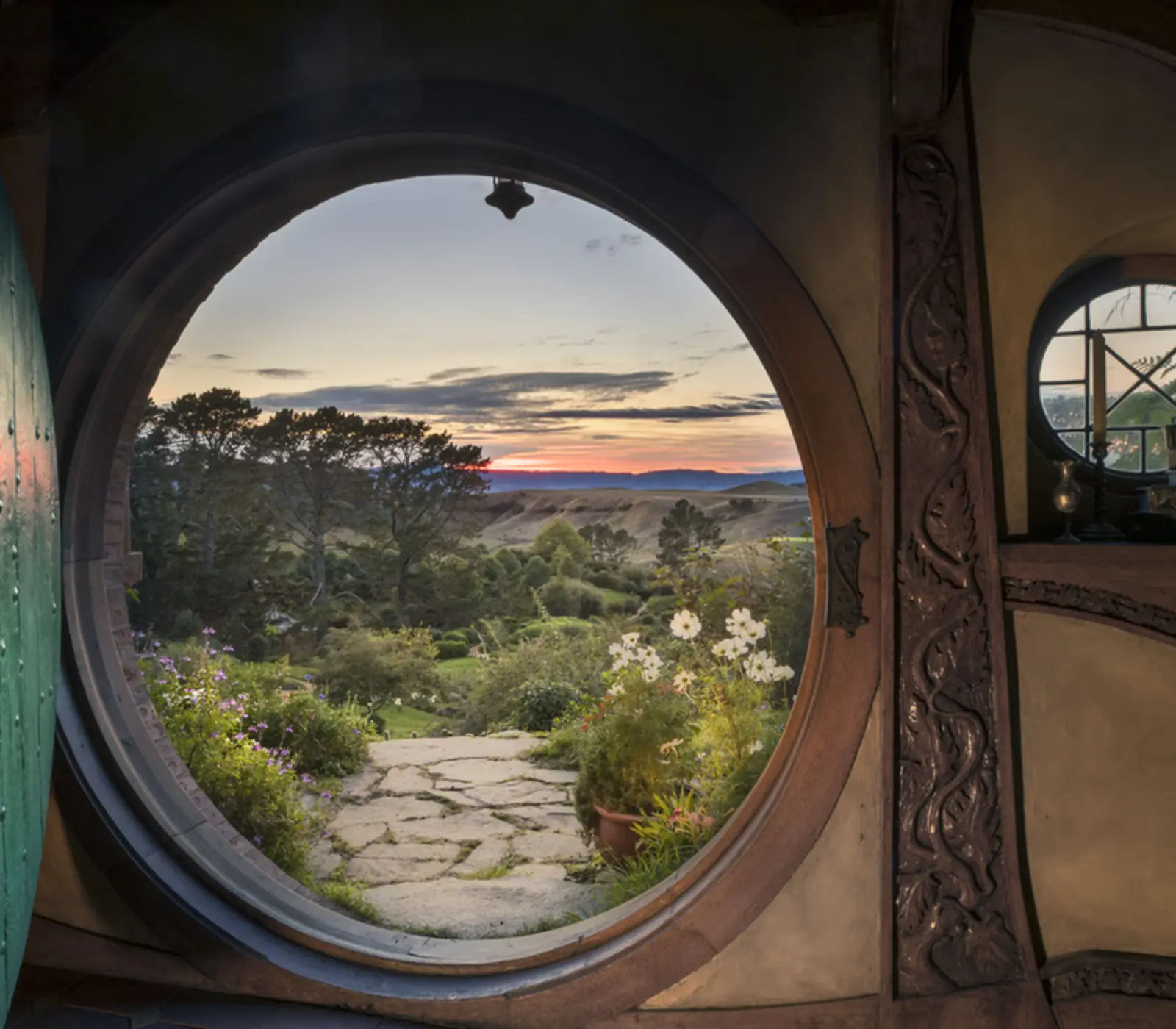
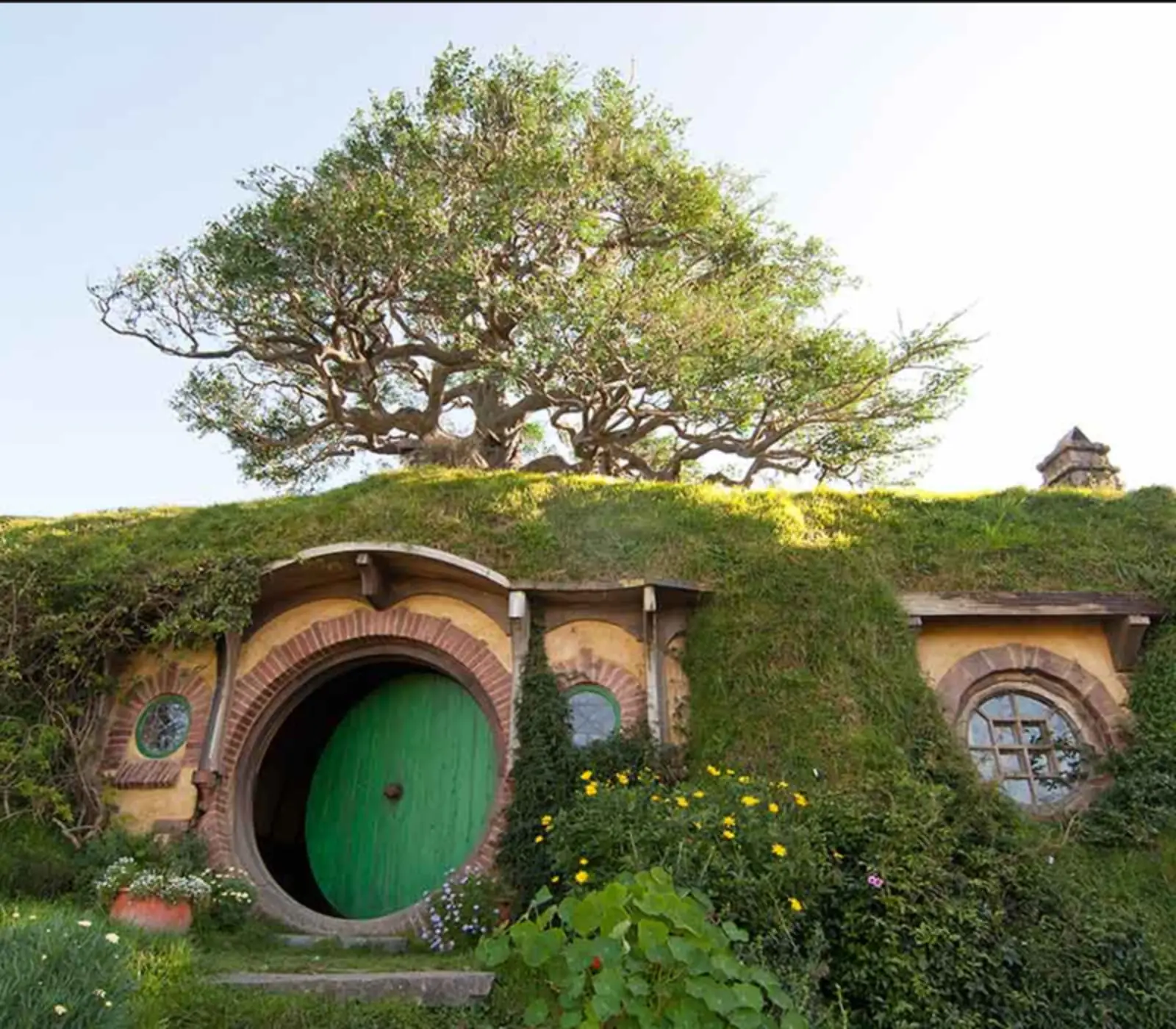
- Hobbiton: about an hour away at Matamata, and the reason 41 of our itineraries go there on the way in. Our guide to whether Hobbiton is worth it is blunt about who will enjoy it.
Our guide to things to do in Rotorua has fifteen suggestions and the two we would skip.
Does Rotorua smell?
Yes. The smell is hydrogen sulphide from the geothermal field, the rotten egg smell of the nickname Sulphur City. It is strongest near Kuirau Park, Ōhinemutu and the lakefront, and on still, damp days; some days you barely notice it. Most visitors stop noticing after a few hours. It does not get into clothes, and it is not dangerous at the levels you meet in the streets, although the fenced areas are fenced for a reason: the ground around vents can be thin and scalding. Keep to the paths, and keep children close.
How to get to Rotorua
Rotorua is in the middle of the North Island, three hours south of Auckland and an hour north of Taupō. Most of our itineraries drive or take a coach down from Auckland. Rotorua Airport (ROT), about 9 km north-east of the centre, has Air New Zealand flights to Auckland, Wellington and Christchurch.
| From | Distance | Driving time | Notes |
|---|---|---|---|
| Auckland | About 230 km | About 3 h | The usual way in; 105 of our itineraries come this way |
| Hobbiton (Matamata) | About 65 km | About 1 h | A common stop between Auckland and Rotorua |
| Taupō | 80 km | About 1 h | State Highway 5, past Wai-O-Tapu and Waimangu |
| Napier | About 220 km | About 2 h 45 | Via Taupō; 36 of our itineraries go on this way |
| Wellington | About 450 km | About 5 h 30 | Via Taupō and the Desert Road; a long day |
How long to stay, and when to go
Two nights is what most of our itineraries give Rotorua, and it is enough for a first trip: one geothermal park, the evening at Te Pā Tū, the redwoods and a hot pool, with Hobbiton on the way in. One night is a rush. Three lets you add Tarawera, the lakes or a day on a mountain bike. If you are choosing between Rotorua and Taupō for a base, Rotorua has more to do and Taupō is the nicer town to stay in; the drive between them is an hour, so you can do both.
Rotorua sits about 280 m above sea level, so it is cooler than the coast. Average highs are about 23°C in January and 12°C in July, winter nights often bring frost, and about 1,350 mm of rain falls a year. The geothermal parks work in any weather, and the steam is thicker and more dramatic on cold mornings. Summer and the school holidays are the busiest; autumn, March to May, is our pick. Check the MetService forecast before a lake or forest day.
Where to stay in Rotorua
Stay in the centre, between the Government Gardens and Kuirau Park, if you want to walk to the lakefront, the spa and the restaurants on Eat Streat. Fenton Street, running south towards Te Puia, is lined with motels, many with private hot pools. For something quieter, there are lodges on the shores of Lake Rotorua and Lake Tarawera.
Silver Fern Suites and Spa, no connection to us despite the name, hosts 33 of our itineraries, with the Millennium Hotel Rotorua on 32, Sudima Lake Rotorua on 30 and Quest Rotorua Central on 21. On the Point, a lodge on the lake, is on 13, and Solitaire Lodge, on a peninsula on Lake Tarawera, is the luxury choice on 3.
What the itineraries do in Rotorua
203 of our itineraries reach Rotorua and 203 sleep there: 22 for 1 night, 162 for 2 nights, 18 for 3 nights, 1 for 4 nights. Counted from the day by day of every tour, so the numbers move with the catalogue.
- Te Pā Tū Evening Māori Cultural Experience - Dinner Included on 120 itineraries
- National Kiwi Hatchery Experience on 60 itineraries
- Original Ziplining Experience with Rotorua Canopy Tours on 57 itineraries
- Hobbiton Movie Set Signature Tour from Shires Rest on 41 itineraries
- Wai-O-Tapu Thermal Wonderland on 35 itineraries
- Auckland to Rotorua Small Group Tour via Hobbiton with Bush and Beach on 19 itineraries
- Polynesian Spa Deluxe Lake Spa on 19 itineraries
- Mountain Jade - Highlights Tour on 13 itineraries
Where they stay: Silver Fern Suites & Spa (33), Millennium Hotel Rotorua (32), Sudima Lake Rotorua (30), Quest Rotorua Central (21), On the Point (13), Millennium Hotel Rotorua (or similar) (6). Every property is named on its tour page, with the room grade.
Most arrive from Auckland (105), Wellington (24), Cooks Beach (13) and carry on to Wellington (58), Auckland (47), Napier (36).