Invercargill is the southernmost city in New Zealand: about 51,000 people on the Southland plains near the bottom of the South Island, 30 km north of the port at Bluff. It has Scottish bones. The surveyor John Turnbull Thomson laid the town out in 1856, it was named for Captain William Cargill of the Otago settlement with the Gaelic inbhir, a river mouth, in front, and most of the central streets carry the names of Scottish rivers: Dee, Tay, Esk, Spey, Tweed. The country around it is flat, green and farmed, and nobody drives down for the view. People come for the engines, the oysters and the short flight to Stewart Island.
Of the itineraries we sell, 78 pass through Invercargill. Most of them are self-drive days between Dunedin and Te Anau, with the city as the halfway stop for fuel and lunch. 18 stay the night, 14 of them for one night, and the ones that give it two use the spare day for Stewart Island. Below is what we tell people deciding whether to stop, and for how long.
- From Dunedin
- 205 km, about 2 h 45
- From Te Anau
- 158 km, about 2 h
- From Queenstown
- 187 km, about 2 h 30
- From Bluff
- 30 km, about 30 min
- Nearest airports
- Invercargill (IVC), on the western edge of the city, Queenstown (ZQN), about 2 h 30 by road, Dunedin (DUD), about 2 h 30 by road
Where Invercargill is, and what kind of city it is
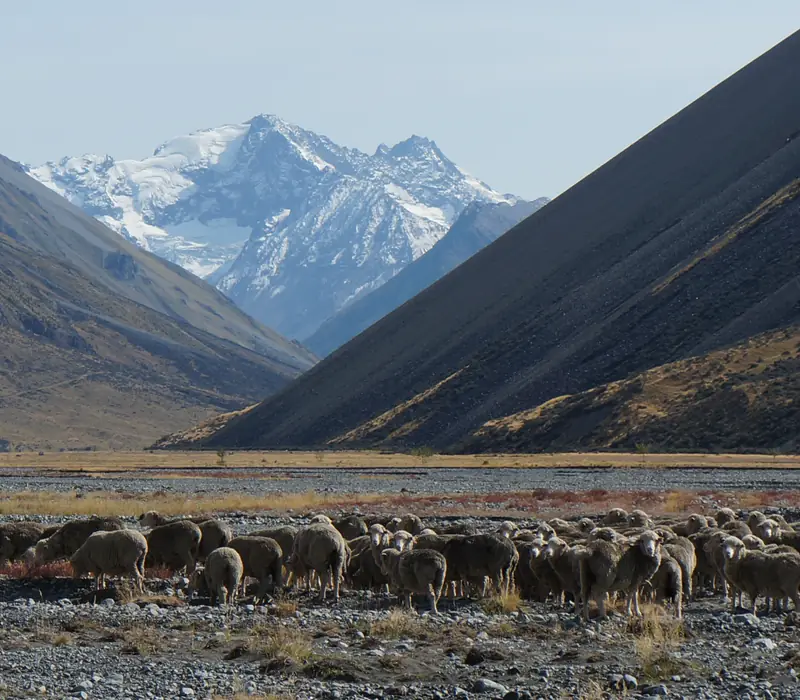
The city sits on open plain between the New River Estuary and the farmland that runs north towards the Takitimu Mountains, with Fiordland to the north west and the Catlins coast to the east. Its Māori name, Waihōpai, means the water of Pai. Invercargill is where Southland comes for machinery, hospitals, schools and a night out, and it looks like it: low, spread out, practical, with a handful of grand Victorian and Edwardian buildings in the centre and a lot of car yards on the way in. You will hear the Southland burr here, a rolled R left by the Scottish settlers, more often out in the country than in town.
For about forty years the city was dry. Invercargill voted for prohibition in December 1905, and while the ban lasted the beer came in by the keg from hotels just outside the boundary. When it ended after the Second World War, the city handed its liquor monopoly to a community trust, and the Invercargill Licensing Trust still runs many of the local hotels, bars and bottle stores and gives its profits back to the city. It is one of several things about Invercargill that make more sense once you know them.
Things to do in Invercargill
Invercargill calls itself the classic motoring capital of New Zealand, and three collections back the claim. A morning covers them if you are keen; a day does if you are very keen.
- Bill Richardson Transport World: about 15,000 square metres of sheds holding more than 300 vehicles, grown from the collection a Southland trucking man, Bill Richardson, started in 1967. Pre-war American trucks, Kombi vans, Ford V8s, a 1940 Dodge Airflow that is one of three known to be restored, and a case of about 1,500 Happy Meal toys. Allow two hours. It is a named activity on 2 of our self-drive itineraries, and the guided coach and small-group tours that stop here take their passengers through it as well.
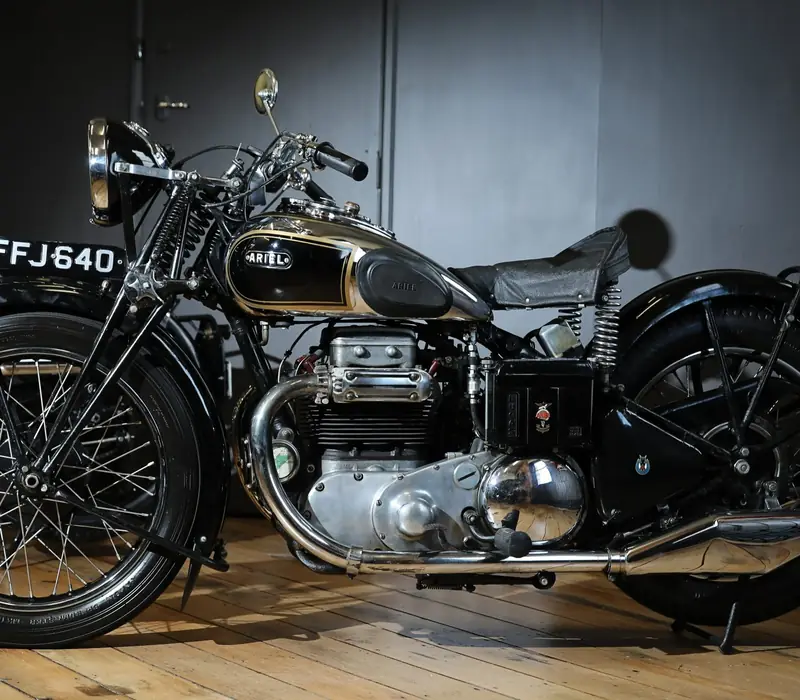
- Classic Motorcycle Mecca, on Tay Street in the centre: more than 300 motorcycles, the oldest a 1902 Peugeot, with rooms given over to John Britten's race bikes and to Burt Munro. It is the largest display of motorcycles in the country, and 2 of our itineraries include the guided tour.
- E Hayes and Sons on Dee Street, a hardware store that keeps Burt Munro's own 1920 Indian Scout among the aisles, with about 100 other bikes, cars and engines. Munro spent decades rebuilding it and in 1967 rode it to an under-1,000 cc record at Bonneville that still stands. Entry is free during shop hours. If you have seen The World's Fastest Indian, the 2005 film with Anthony Hopkins as Munro, allow half an hour.
- Queens Park: 80 hectares of gardens, sports grounds, a golf course and an animal reserve on the north side of the centre. Since June 2024 the city's tuatara have lived in Te Moutere, a new enclosure in the reserve, among them Henry, who is thought to be more than 110 years old and became a father for the first time in 2009.
- Ōreti Beach, 10 km west: 26 km of hard sand on Foveaux Strait where Munro practised, and one of a handful of New Zealand beaches you may legally drive on. Rental car agreements usually forbid it, so walk it instead.
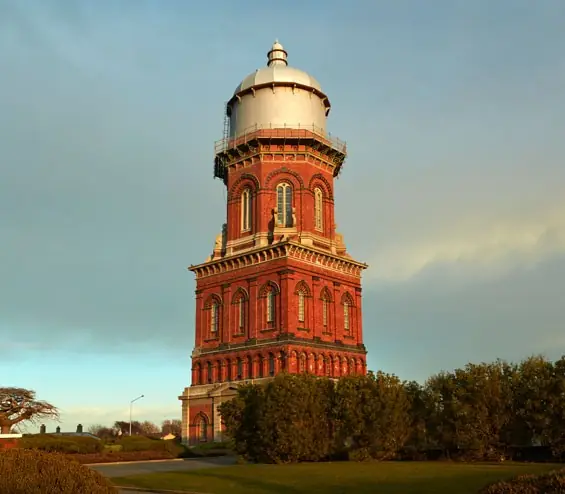
- The water tower, finished in 1889, is the building on the postcards: a red brick Victorian tower with the steel tank on top. It is heritage listed and you look at it from the street, because there is no public access.
One gap in the list. The Southland Museum and Art Gallery, the pyramid at the edge of Queens Park that used to house the tuatara, closed in April 2018 because the building was an earthquake risk, and it was pulled down in 2024. The demolition crew found four baby tuatara still living in the old enclosure, probably missed as eggs. The replacement, Te Unua Museum of Southland, is due to open in 2027.
Bluff, oysters and the crossing to Stewart Island
Bluff is 30 km south, about half an hour down the last stretch of State Highway 1, which ends at Stirling Point beside a signpost giving the distances to the Equator, the South Pole and Invercargill's sister cities. In 2017 a Scottish visitor worked out that the distances and coordinates on it were wrong, and the council corrected them in 2018. Stirling Point is also the southern end of Te Araroa, the trail that runs the length of the country. Behind the town, the lookout on Motupōhue, Bluff Hill, 265 m, looks across Foveaux Strait to Stewart Island on a clear day. Bluff is a working port of about 1,800 people and has been settled since a whaling station opened there in 1836.
Bluff oysters are the other draw. The wild season runs from March to August, and the town holds its oyster and food festival in May. Recent seasons have been poor, so the oysters are scarce and dear: eat them if you see them on a menu, but do not build a day around them.
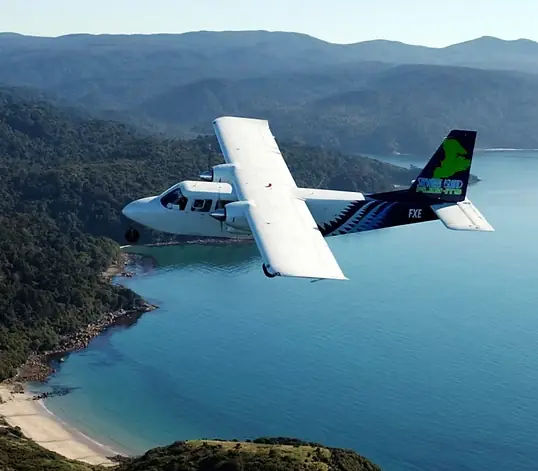
Stewart Island, Rakiura, is across the strait. The RealNZ ferry from Bluff takes about an hour on water that has a reputation, and Stewart Island Flights cross from Invercargill airport to Oban in about twenty minutes in a small plane. Of our itineraries, 5 go on to the island from here, usually by air, and our Stewart Island page covers what to do once you land. Two nights is the least we would suggest.
How to get to Invercargill
Invercargill Airport (IVC) is on the western edge of the city, and Air New Zealand flies there from Christchurch and direct from Auckland, so from Australia or the UK it is one connection. Most visitors drive, and 8 of our itineraries arrive from Dunedin.
| From | Distance | Driving time | Notes |
|---|---|---|---|
| Dunedin by State Highway 1 | 205 km | About 2 h 45 | The quick way, inland through farm towns |
| Dunedin through the Catlins | About 245 km | About 3 h 30 without stops | A full day once you stop for the waterfalls and the wildlife |
| Te Anau | 158 km | About 2 h | 10 of our itineraries go on to Te Anau from here |
| Queenstown | 187 km | About 2 h 30 | State Highway 6 through Lumsden and Kingston |
| Bluff | 30 km | About 30 min | For the Stewart Island ferry |
The day that catches people out is one many of our self-drive itineraries include: Dunedin to Te Anau in one go, by way of Invercargill. By the quickest roads that is about 360 km. Follow the day notes along the Catlins coast and then west on the Southern Scenic Route through Riverton and Tuatapere, and it is closer to 430 km, more than six hours of driving before you stop for a single waterfall. It can be done in summer with an early start. We would rather you broke it with a night here or in the Catlins, and our Catlins guide makes the case.
How long to stay, and how our itineraries use it
One night suits most people, and it is what 14 of our 18 overnight itineraries allow. 4 give it two: the small-group coach tours spend the second day on an optional trip to Stewart Island, and the southern self-drives fly to the island from here and leave the car behind. The guided tours also take their passengers through Transport World on the way in.
Our view is simple enough. If you like machines, give it two nights and a full day: Transport World in the morning, Classic Motorcycle Mecca and E Hayes after lunch, Bluff for the evening. If you do not, an afternoon covers E Hayes and Queens Park, and the city does its real job as a comfortable bed between the Catlins and Fiordland before you carry on to Te Anau. Every itinerary that stops here is on the tours through Invercargill list.
Weather and the best time to go
Invercargill is cool, damp and windy, and milder than its latitude suggests. January averages a high of about 19°C and July about 10°C, with frosts on clear winter nights. It rains on about 160 days a year, but lightly, adding up to around 1,100 mm, and the city logs about 1,760 hours of sunshine. It calls itself the City of Water and Light. The light is the long summer evening, close to 16 hours of daylight at the December solstice, and the aurora australis, which glows low over the southern horizon on some clear nights. The water, according to local humour, is the rain that blows sideways across the corner of Dee and Tay Streets. Check MetService before a day at Bluff or a flight to the island.
Summer, December to February, is the easy choice. February brings the Burt Munro Challenge, five days of motorcycle racing on Ōreti Beach, at the Teretonga circuit and on the speedway, and the beds go early. The oyster season opens in March and the Bluff festival follows in May. Winter is cold and quiet, the nights are long enough for aurora watching, and the Southern Scenic Route stays open, though you should expect ice on shaded inland roads in the mornings.
Where to stay in Invercargill
Our self-drive itineraries use two places. The Langlands, a newer hotel of 78 rooms in the city centre run by the Licensing Trust, with five places to eat and drink under one roof, is where 4 of them sleep. The Lodges at Transport World, a small set of themed apartments across the street from the museum, take 4, and suit anyone happy to wake up thinking about trucks. The guided coach tours stay at the Distinction Invercargill, in a converted government building. Beyond those the city has motels, holiday parks and a handful of hotels, and you will pay less than in Queenstown. Book early if your dates fall on the Burt Munro Challenge in February.
What the itineraries do in Invercargill
78 of our itineraries reach Invercargill and 18 sleep there: 14 for 1 night, 4 for 2 nights. Counted from the day by day of every tour, so the numbers move with the catalogue.
- Bill Richardson Transport World - General Admission on 2 itineraries
- Classic Motorcycle Mecca General Admission and Guided Tour on 2 itineraries
- Stewart Island Walking Tracks on 1 itinerary
Where they stay: The Langlands (4), The Lodges At Transport World (4). Every property is named on its tour page, with the room grade.
Most arrive from Dunedin (8), Omarama (6), Te Anau (4) and carry on to Te Anau (10), Stewart Island (5), Dunedin (4).