When to go
The best time to visit Australia and New Zealand on one trip
The best time to visit Australia and New Zealand together is October to November or March to April. Those are the months when Sydney and Melbourne are mild, New Zealand’s South Island is open and green or gold, the tropical north of Australia is either before or just after its wet season, and Uluru is hot but walkable. Every other month makes one of the five places you probably want to see work harder than it should.
The catch is that the two countries sit in the Southern Hemisphere and your calendar does not. October there is spring, March is autumn, and the Christmas break most American families can actually take lands in the middle of the Australian tropical wet season. Below is the month by month picture for both countries, which one to visit first, and how each US holiday window plays out.
Why there is no single best month
Australia is not one climate. Its top end, Cairns and the reef included, is tropical, with a wet season the Bureau of Meteorology defines as October to April: heavy rain, storms and the cyclone season. The red centre around Uluru is desert, lovely in winter and brutal in summer. Sydney and Melbourne are temperate, and so is all of New Zealand, where NIWA puts the warmest month in January or February and the coldest in July.
So the question is less "when is the weather best" and more "which region are you willing to see at less than its best". A good trip plan picks the months where nobody on the list is at its worst. That is where the two shoulder windows come from.
This is the exact dilemma in a long-running r/travel thread on a combined trip: December to March suits Sydney and New Zealand beautifully, and it is the wet season in Queensland. The replies there land where we do. If the reef matters to you, avoid the height of summer. If it does not, summer is fine.
Month by month, both countries
Read across a row. Good means the place is at or near its best; mixed means worth going with a caveat; avoid means you will spend the day managing the weather rather than enjoying the place.
| Month | Sydney and Melbourne | Cairns and the reef | Uluru | NZ North Island | NZ South Island |
|---|---|---|---|---|---|
| January | Good, hot and busy | Avoid, peak wet season | Avoid, extreme heat | Good, peak summer | Good, peak summer and crowds |
| February | Good, warm, quieter | Avoid, wettest month | Avoid, extreme heat | Good, settled weather | Good, long days |
| March | Good, mild | Mixed, rain easing | Mixed, still hot | Good, warm sea | Good, early autumn |
| April | Good, crisp and clear | Mixed, wet season ends | Good, cooling | Good | Good, autumn gold |
| May | Mixed, cool | Good, dry season starts | Good | Mixed, cooler, wetter | Mixed, first snow |
| June | Mixed, cool | Good | Good, cold nights | Mixed | Mixed, ski season, short days |
| July | Mixed, cool | Good, peak dry season | Good, cold nights | Mixed, wettest months | Mixed, great for skiing only |
| August | Mixed, cool | Good | Good | Mixed | Mixed, snow, clear alpine days |
| September | Good, spring | Good | Good, warming | Mixed, spring showers | Mixed, spring, snow up high |
| October | Good | Good, hot, wet season near | Mixed, hot days | Good | Good, spring, lambs, fewer people |
| November | Good, warm | Mixed, build-up heat and humidity | Mixed, hot | Good | Good, lupins from late November |
| December | Good, hot, holiday crowds | Avoid, wet season underway | Avoid, extreme heat | Good, summer | Good, summer, busiest weeks |
Uluru’s "avoid" is not an exaggeration. Parks Australia closes the Valley of the Winds walk beyond the first lookout from 11am when the forecast reaches 36°C, which is about 97°F, and summer days routinely go past that. In Queensland, the marine stinger season runs roughly November to May, according to WorkSafe Queensland; reef boats hand out full-body stinger suits, and the outer reef is still visited all year.
Seasons flipped: the cheat sheet for Americans
Every guide says the seasons are reversed. Here is what that means in practice when you are looking at your own calendar.
| When it is this in the US | It is this down there | Pack for |
|---|---|---|
| September to November, fall | Spring | Layers; South Island nights near freezing into October |
| December to February, winter | Summer | Sun protection first; the UV is fierce in both countries |
| March to May, spring | Autumn | A warm jacket for the South Island by late April |
| June to August, summer | Winter | Proper winter gear for New Zealand, light layers for Cairns |
Daylight saving flips too. New Zealand moves its clocks forward in late September and back in early April, so the time difference with the US changes twice a year, and not on the same weekends as yours. For most of the Southern summer, New Zealand is 21 hours ahead of California and Sydney is two hours behind New Zealand.
Which country first
The rule we use: in spring, start in Australia and finish in New Zealand; in autumn, do the reverse. Spring warms from north to south, so in September and October you catch the reef and Uluru before the heat builds, then reach the South Island as it wakes up. In March and April, the South Island is at its best early, before the cold arrives, and the Australian north dries out the longer you wait.
| You leave the US in | Go first to | Then | Why |
|---|---|---|---|
| September or October | Cairns, Uluru | Sydney, then New Zealand | The north before the build-up heat; New Zealand as spring warms |
| November | New Zealand | Sydney and Melbourne | Skip the tropics or keep it short; the humidity is building |
| December to February | New Zealand | Sydney, Melbourne, Tasmania | Southern summer; leave the north for another trip |
| March | New Zealand, South Island first | Sydney, then Cairns late in the trip | The wet season is easing in Queensland |
| April | New Zealand | Uluru, then Cairns | Autumn in the South Island, dry season arriving in the north |
A TravelNoPics thread asks the long version of this question, planning seven months from August to March across Southeast Asia, Australia and New Zealand. The answer is the same logic stretched out: Southeast Asia in the northern autumn, Australia’s north before November, New Zealand for the southern summer, Sydney last.
Flights shape the order too. The US nonstops land in Sydney, Melbourne, Brisbane and Auckland, and the Tasman crossing is about three hours with many daily departures. An open-jaw ticket, into one country and home from the other, usually costs little more than a return and saves a backtrack. Our US flights guide lists every nonstop.
Fitting it around US holidays
Most Americans do not get to pick any month they like. Here is what each of the usual windows gets you.
| US window | Dates in 2026/27 | What you get | What to watch |
|---|---|---|---|
| Thanksgiving week | 26 November 2026 is Thanksgiving | Late spring in New Zealand, warm Sydney, quieter than December | Cairns is humid and stinger season has started |
| Christmas to New Year | Late December to early January | Full summer, long evenings, Sydney’s New Year fireworks | Peak fares, local school holidays in both countries, book beds early |
| Spring break | Usually March | The best single week of the year for New Zealand; Sydney still warm | One week is short for two countries; pick one |
| US summer | June to August | Reef and Uluru at their best, New Zealand ski season | Cold, short days in the South Island; Sydney is cool |
The Christmas question comes up constantly. One r/traveladvice thread comes from a California family with a five and a seven year old and two and a half weeks in December, asking whether to do Australia, New Zealand or both. Our answer for that family: both works if you drop the tropics. Ten days in New Zealand and a week split between Sydney and Melbourne is a gentle trip with kids, and December weather in all three is about as good as it gets. See New Zealand with kids for the South Island version.
Crowds, school holidays and fares
Both countries take their long school break across the southern summer, from mid-December to late January, and every family in New Zealand seems to go to the same lake at once. Beds in Queenstown, Wanaka and the Coromandel go first. Our school holidays guide has the exact term dates, and the events calendar has the weekends worth planning around.
Fares from the US follow the same curve. The priciest weeks are the Christmas and New Year fortnight. Shoulder months are cheaper, and so is winter, though winter is the season that asks the most of a South Island trip. Some real numbers help here. In July 2026 Delta was selling Los Angeles to Auckland from $746 USD return in basic economy, taxes in, for travel in late October to early December and late January to early April, as The Flight Deal reported. Treat that as a sale fare, not a typical one; it does show which weeks the airlines are trying to fill.

What to skip in each season
- December to March: skip Cairns, the Daintree and Kakadu unless you are fine with rain most afternoons and a cyclone watch. Skip Uluru, or go for one night and do everything at dawn.
- June to August: skip the long South Island road loop. Passes such as the Crown Range and the road to Milford can need chains or close for snow. Go for the ski fields or not at all, and put Cairns and Uluru at the centre of the trip instead.
- September: New Zealand’s high tracks still carry snow, and the Tongariro Alpine Crossing is still in winter conditions, which means a guide for most visitors. The lowland North Island is fine.
- Any month: skip the idea of seeing all of both countries in two weeks. It is the most common plan we talk people out of.
For a first trip, give it three weeks: twelve to fourteen days in New Zealand and a week in Australia. Less than that and you spend the trip in airports. If you only have two weeks, do one country properly and save the other. Our New Zealand or Australia comparison helps with that choice.
New Zealand tours that fit each window
We book the New Zealand half. Here is what we would put in each window for a first trip from the US, all starting in Auckland where the nonstops land.
- October and November: the New Zealand Grand Tour, two weeks by car from Auckland to Christchurch, with Rotorua and the South Island lakes in spring.
- December to February: the Auckland to Queenstown Highlights Tour, eleven days that end in Queenstown in high summer. Book it early; beds are the constraint.
- March and April: New Zealand Vista, a fortnight by coach with nobody in your party behind the wheel, which is the right call if you are flying on to Australia tired.
All of these can shift a few days either way to meet your trans-Tasman flight. The full range for US travellers is on our New Zealand vacation packages page, and the complete list is under tours. For New Zealand on its own, month by month, start with the best time to visit New Zealand.
Quick answers
Trips that fit

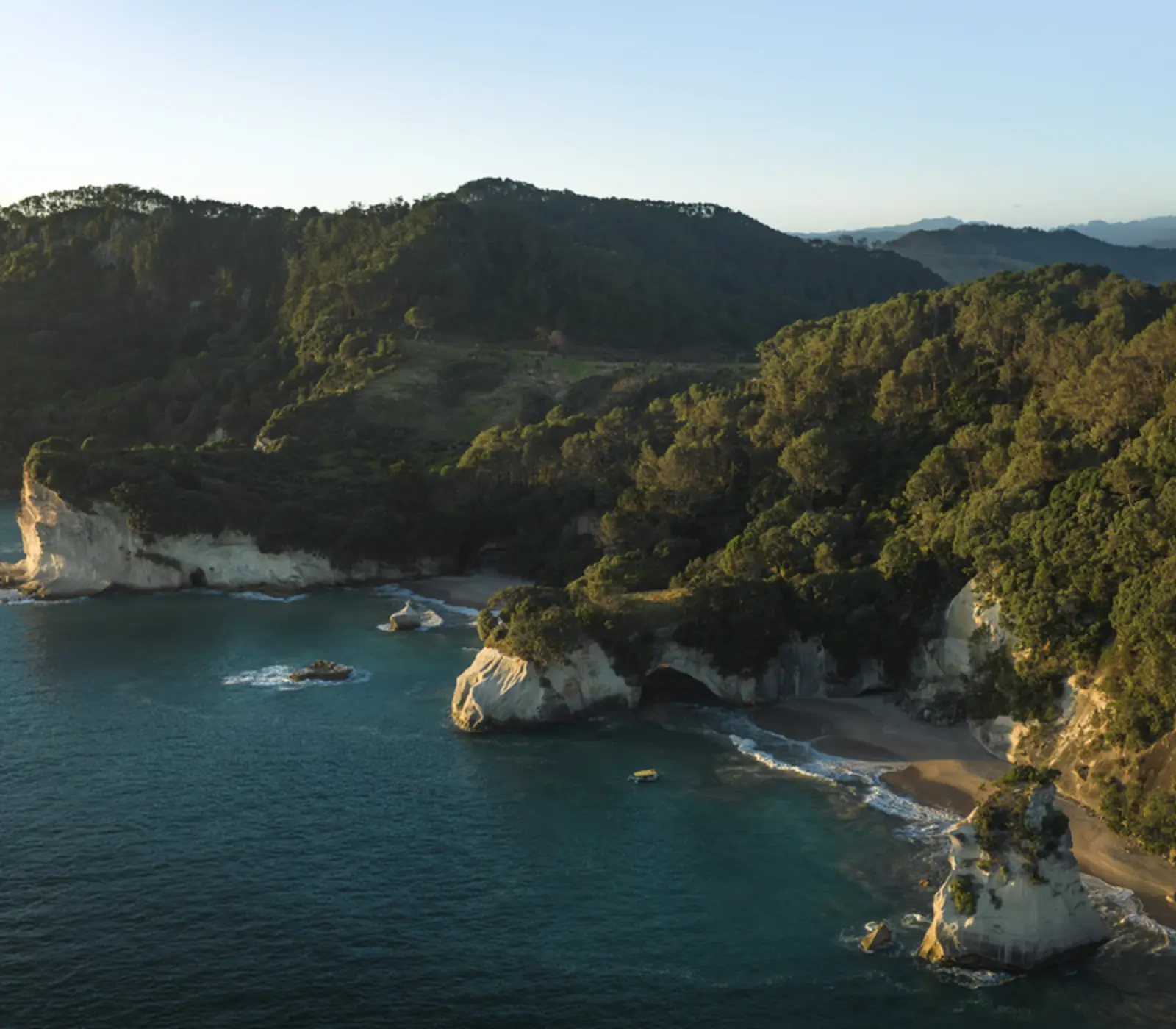
New Zealand Grand Tour
14 days across both islands, Auckland away to Christchurch, driving yourself, with the route planned for you. Strong on food and wine.


Auckland to Queenstown Highlights Tour
11 days across both islands, Auckland to Queenstown, at your own pace behind the wheel. Strong on adventure.

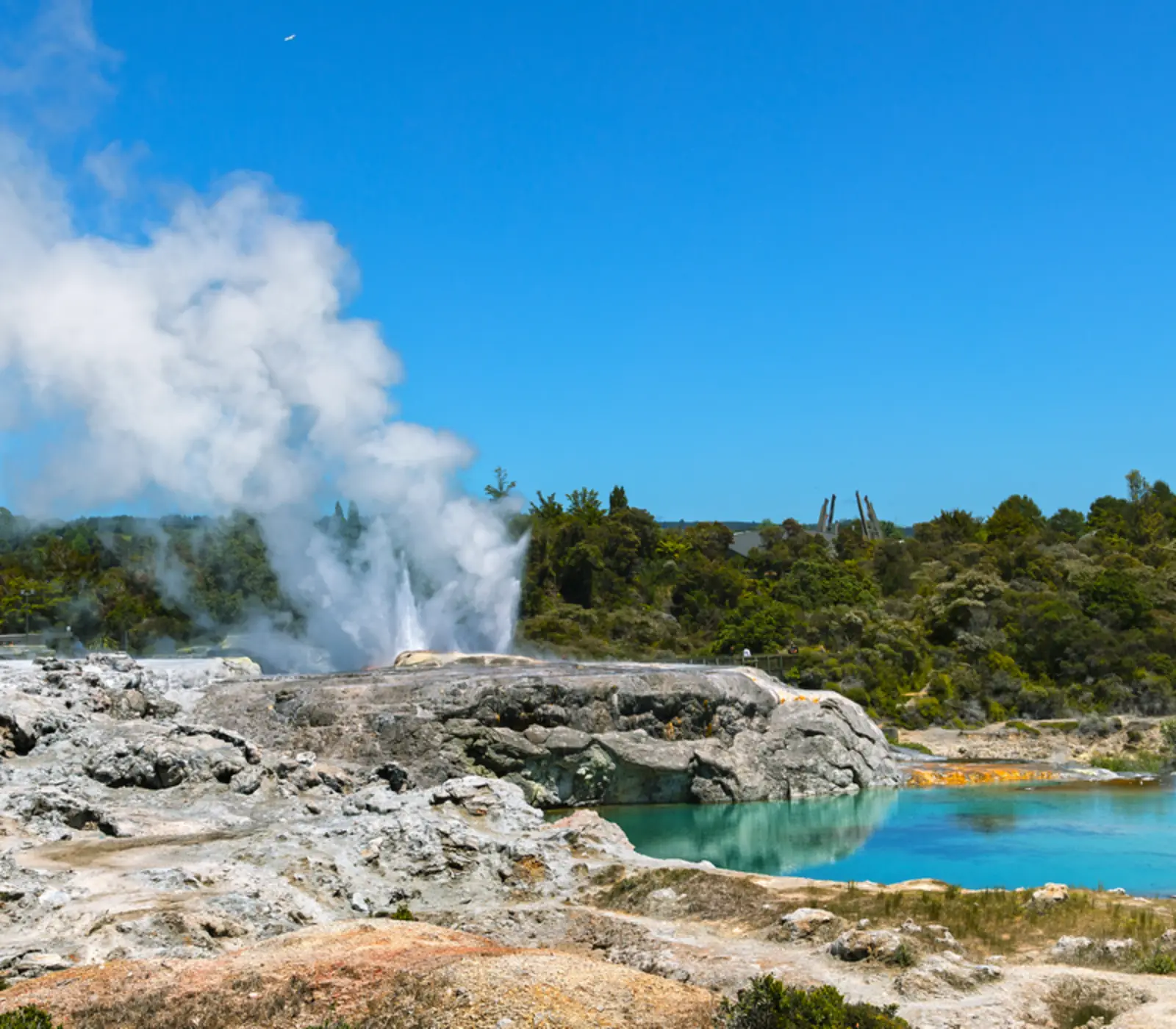
New Zealand Vista
14 days across both islands, Auckland to Christchurch, travelling independently on scheduled coach services, no guide. Strong on Māori culture.