When to go
New Zealand weather by month: the full table
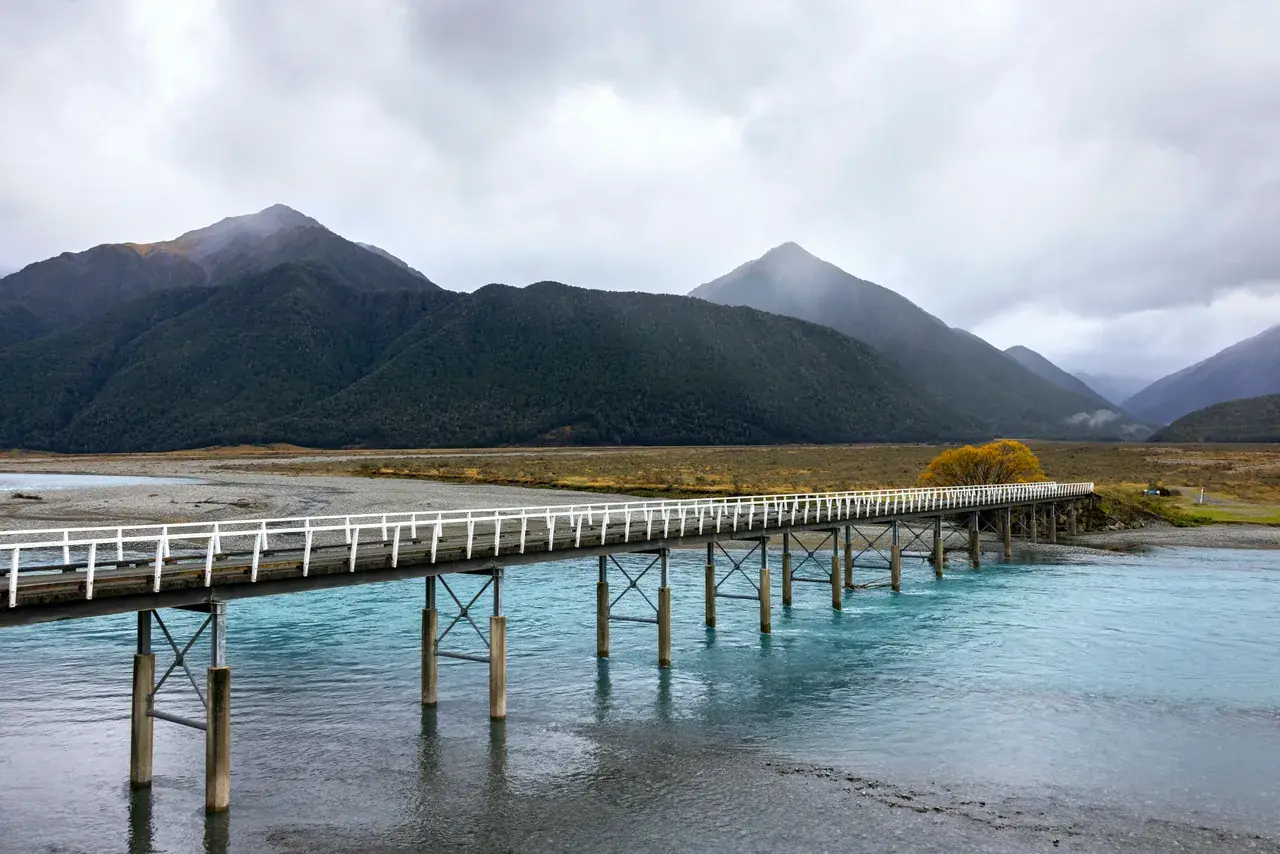
New Zealand runs from the subtropical north to the sub-Antarctic south across the length of Britain, and the weather in any month depends on which end you are standing at. This table gives the two ends: Auckland, the warm humid north, and Queenstown, the cold dry inland south. Everywhere else sits between them. The caveat is in the last column, because the character of a month matters more than its averages.
The table
| Month | Auckland high / low | Queenstown high / low | The character |
|---|---|---|---|
| January | 24 / 16 | 22 / 11 | Peak summer, peak crowds until the end of the month |
| February | 24 / 16 | 22 / 10 | Warmest sea, most settled: the locals’ pick |
| March | 23 / 15 | 19 / 8 | Summer without the queues; colour starts in the south |
| April | 20 / 12 | 15 / 5 | Autumn gold, calm air, shoulder prices |
| May | 17 / 10 | 12 / 2 | The quiet bargain; short days begin |
| June | 15 / 8 | 9 / 0 | First snow, ski fields open, Matariki in 2027 |
| July | 14 / 7 | 8 / -1 | Deep winter: ski peak, school holidays, whales at Kaikoura |
| August | 15 / 8 | 10 / 0 | The best snow, the storm month, thin crowds |
| September | 16 / 9 | 12 / 2 | Snowmelt waterfalls, spring skiing, changeable |
| October | 18 / 11 | 15 / 4 | Reliable spring, gardens peaking, long days back |
| November | 20 / 12 | 17 / 6 | Lupins, near-summer warmth, pre-peak space |
| December | 22 / 14 | 20 / 9 | Summer arrives; quiet early, full from the 19th |
Temperatures are typical daily highs and lows in degrees Celsius. The islands run about four degrees apart all year, and the difference is bigger at night than by day. NIWA’s overview puts the mean annual temperature at about 16 degrees in the north and 10 in the south, with January or February the warmest month and July the coldest everywhere.
The four patterns worth knowing
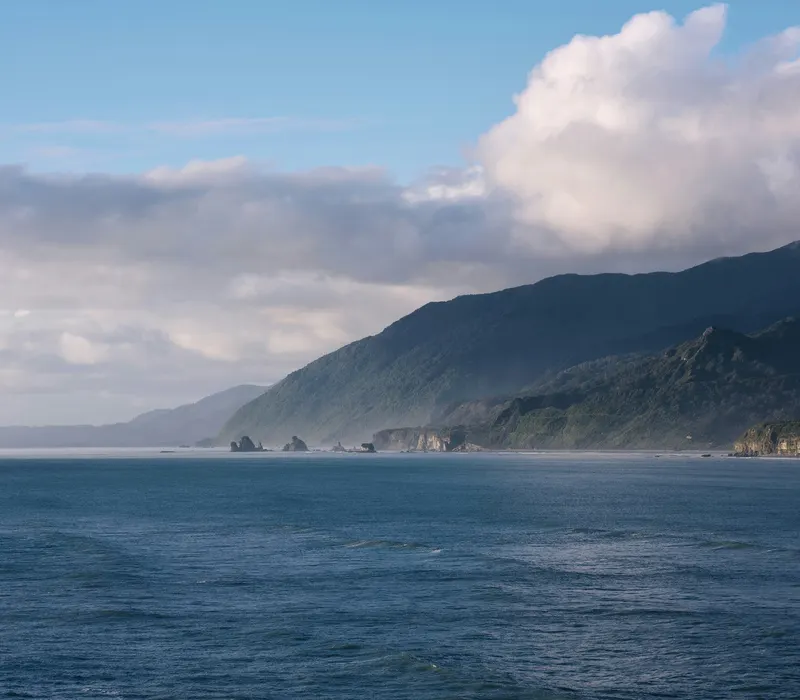
- The West Coast is wet and the east is dry, because the Southern Alps wring the westerlies out. Milford Sound gets about seven metres of rain a year; Christchurch, 150 kilometres east, gets 600 millimetres.
- The northwest wind is the weather-maker. A northwest front brings hot dry air to Canterbury and Otago, sometimes over 30 degrees, and a wall of rain to the West Coast the same afternoon.
- The southerly is the reset. It follows the northwester within a day or two, drops the temperature ten degrees, and puts snow on the passes in any month from April to November.
- The sea lags the air. The water is warmest in February and coldest in August, a month behind the land, which is why late summer swims better than early.
Sea and lake temperatures
| Water | Warmest | Coldest | Swimmable |
|---|---|---|---|
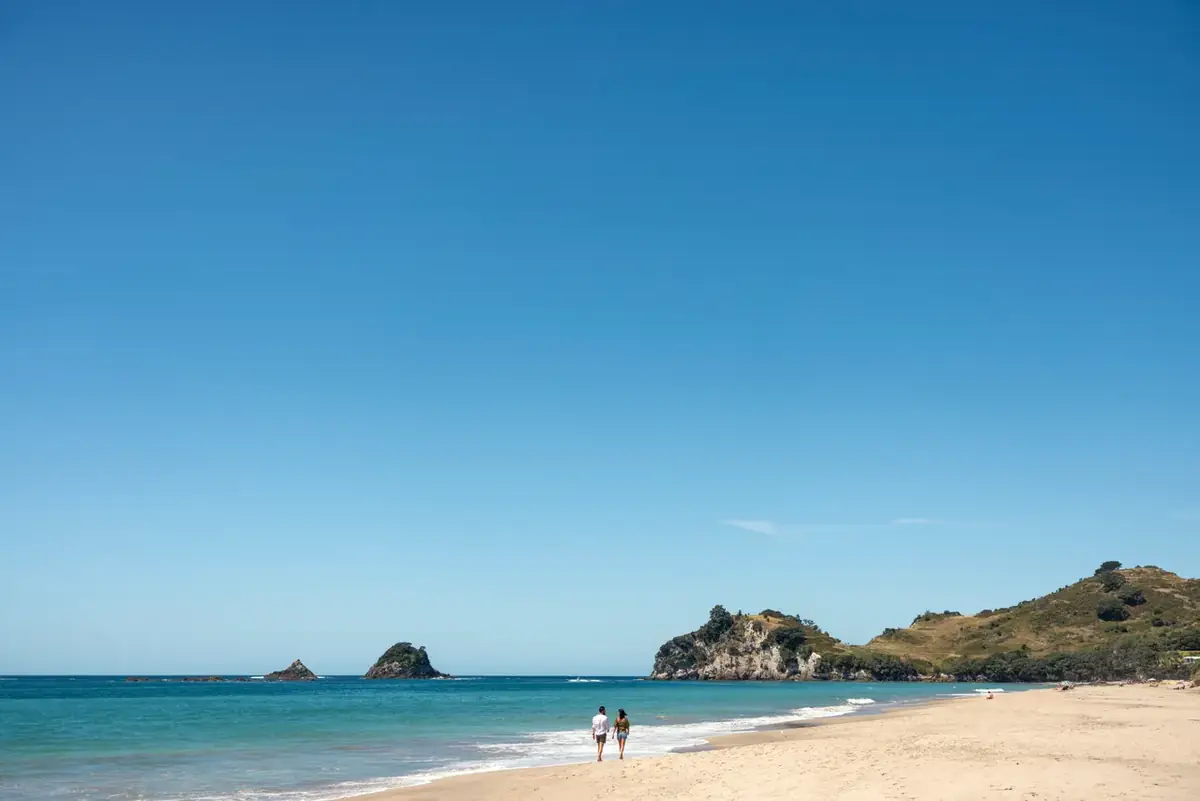
| Northland and Coromandel | 21 to 22 in February | 14 in August | November to April |
| Wellington and Marlborough Sounds | 18 in February | 11 in August | December to March |
| Christchurch and Kaikoura | 16 in February | 10 in August | January and February, briefly |
| Southern lakes | 17 at the surface in February | 6 in July | Hot summer afternoons only |
The lakes are alpine and stay cold at depth all year. The hot pools at Rotorua, Hanmer Springs and Tekapo are the winter swim.
What it means for a trip
- Pack layers in every month. A base, a warm mid-layer and a waterproof shell cover four seasons in a day; the packing list is built on that.
- Put a spare day beside every alpine day. Fiordland, the glaciers and the passes belong to the weather.
- Treat a wet forecast in Milford as the point. The waterfalls appear within an hour of rain and the fiord is at its best in it.
- Sunscreen is not optional from October to March. The UV here is among the highest on Earth for the latitude.
The best time to visit turns this table into a recommendation by traveller type; each month above has its own page with the events, prices and trade-offs.
Quick answers
Trips that fit
New Zealand Explorer
10 days across both islands, Auckland away to Queenstown, guided the whole way, luggage and logistics handled. Strong on family touring.
Taste of the South Island
8 days across the South Island, starting and ending in Christchurch, self drive, with every night booked ahead. Strong on classic driving tours.

Stories of Aotearoa
22 days across both islands, from Auckland through to Christchurch, self drive, with every night booked ahead. Strong on food & wine.